“How’s Ting of Life going?”
The question caught me off guard last night.
Truth be told — no progress has been made in seven months. Ironically, boldly preaching about wanting to experiment life through a series of hypotheses in her previous post, no blog post has been posted since. This girl and her audacity!!! D:<
So what got me dashing back here?
A book.
I started reading Hidden Potential: The Science of Achieving Greater Things by Adam Grant just this morning.
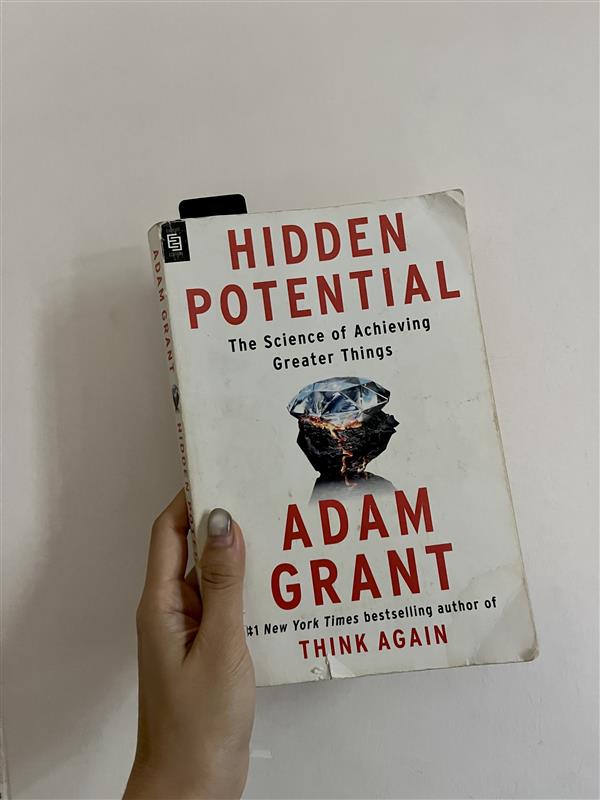
I’m only the first chapter in… and I’m hooked!
The writer argues that becoming better at something is rarely a skill problem — it’s a character problem. Growth depends less on talent and more on traits like determination, proactivity, and discipline.
To develop one’s character skill, it requires one to become a creature of discomfort, where one goes through the journey of actively making mistakes with the intention of becoming better. In turn, these intentional mistakes become valuable data for growth, rather than evidence of inadequacy that stalls progress.
To improve, we must lean into discomfort. To grow, we must abandon the safety of being “good enough. Skill acquisition then follows character expansion.
As the author mentioned,
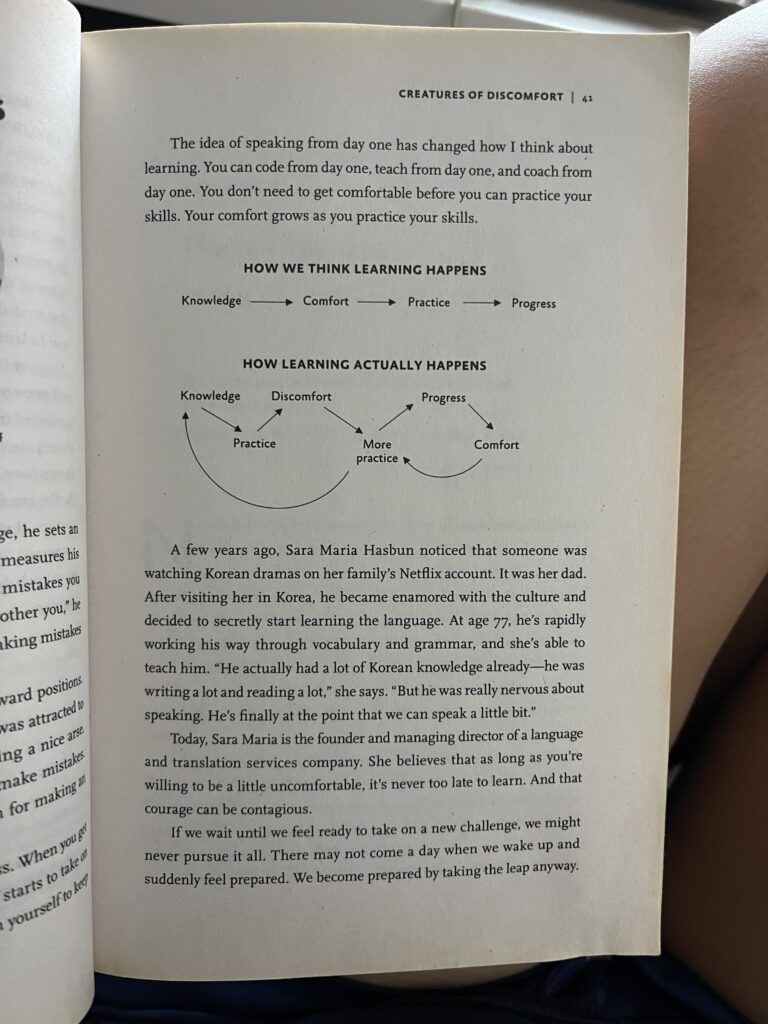
Becoming a creature of discomfort can unlock hidden potential in many types of learning. Summoning the nerve to face discomfort is a character skill – an especially important form of determination. It takes three kinds of courage: To abandon your tried-and-true methods, to put yourself in the ring before you feel ready, and to make more mistakes than others make attempts. The best way to accelerate growth is to embrace, seek, and amplify discomfort.
A Beginner Again
In this instance, I reckon it’s about facing the discomfort of writing and pressing the “Publish” button. I have grown very comfortable with writing over the past year. Draft after draft lives quietly in my notes though… *internally screaming oh my gawd!*
Writing in private feels safe, but publishing in public is exposure. SCARY!
I’m also starting to recognize that growth rarely happens in safety.
We’ve all had those “Aha!” moments — when the desire to improve finally outweighs the comfort of staying where we are. When the cost of stagnation becomes heavier than the fear of trying.
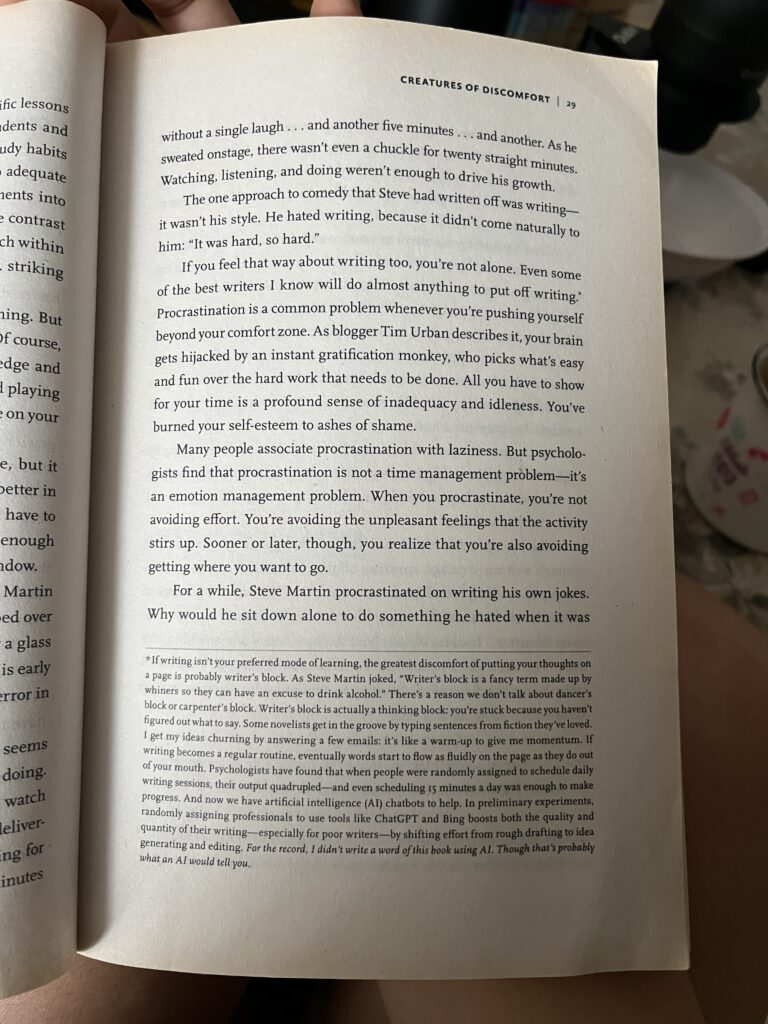
As I pored through the book, I felt seen — especially when I thought about my life experiences and my own journey learning English, where discomfort was my greatest teacher.
Looking Back
As a native mandarin speaker, learning English was not natural for me. I was so used to communicating with my parents in mandarin since I was a child. It felt like the greatest hurdle to overcome since I enrolled into primary school up till my teens.
Whenever my peers spoke to me in English, I was so insecure about my speaking ability that I would respond in Mandarin and barely muttered a word of ang-moh (aka as English in Hokkien). Well, people called me out for it, and that embarrassment stayed with me for years! One day, I decided I was done hiding behind it.
I was truly fortunate to have met 2 very close friends in my teens who were both great at English, and patient enough to be the safe space for my growth as I went through the steep learning curve. From there, I leaned in on their strengths and saw them as my inspiration to become even more confident with my English speaking abilities.
Today, I speak fluent English. The love for this language has also transpired into many heartfelt conversations, built global friendships and also became the main language for my creative expression, which still wows me till this day.
Returning
The first chapter of Hidden Potential has truly awakened this desire of growth, of wanting to push myself beyond my comfort zone again.
That said, I’m so grateful to return to this space, as I learn to lean in on this discomfort and overcome the mental shame of publishing this today! With this crucial information in mind, neuroplasticity seems possible at any age given that growth becomes inevitable when one willingly steps out of their comfort zone.
Character skills may be the most important skills we’d ever build. Granted, I’m so excited to mindfully cultivate this skill in other aspects of life, and watch the wonders that this discomfort would take me. 🙂
Every time we embrace discomfort, we build our character and unlock new potential. What discomfort will you welcome today?
Leave a Reply